

December, it’s snowing, someone texts: We’re nearby on short notice—can we stop by for a bit? One cup of tea quickly turns into a set table, an improvised breakfast the next morning, and maybe even a small outing. Those are exactly the kinds of days when household plans start to wobble.
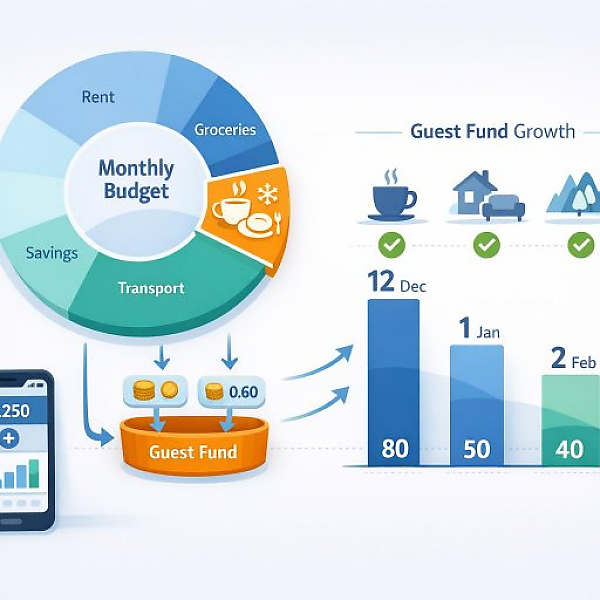
To keep that from happening, a dedicated guest fund in your household budget helps. Using a fictional example from a realistic family routine, this shows how it can work.
The Winter family lives in a two-bedroom apartment: two adults, one preschooler. Both parents work part-time; money isn’t extremely tight, but it isn’t abundant either. They keep a digital household budget with rough monthly targets: rent, groceries, transportation, leisure, savings.
In summer, visits are easier to plan: a barbecue here, a weekend trip there. In winter, though, the surprises show up:
Last winter, that led to some financial surprises. In December, grocery spending suddenly hit 520 euros instead of the usual 380 euros. On top of that, there were an unplanned 120 euros for delivery food, snacks, and drinks. The account didn’t go negative, but the savings cushion shrank noticeably.
For the next winter season, the Winter family creates a separate budget line in their household budget: the guest fund. The idea: everything directly related to hosting goes in there.
The guest fund includes, for example:
The budget is set intentionally—not too tight, but not overly generous either:
The money doesn’t come from some sudden windfall; it comes from small, regular amounts.
The Winter family chooses two simple ways to fill the guest fund:
| Expense | Actual | Rounded | Difference for guest fund |
|---|---|---|---|
| Weekly grocery run | 47.30 euros | 50 euros | 2.70 euros |
| Train ride | 6.10 euros | 10 euros | 3.90 euros |
| Drugstore | 13.80 euros | 15 euros | 1.20 euros |
This adds another roughly 10 to 20 euros per month on top of the standing order—without it feeling especially painful.
So the guest fund doesn’t get wiped out by the first visit, the Winter family intentionally plans inexpensive but cozy ways to host.
Spontaneous winter visits don’t have to mean your household budget goes off the rails. With a clearly defined guest fund, simple go-to recipes, low-cost activity ideas, and honest communication about costs, it’s much easier to stay on top of things.
That way, winter becomes a season when people are welcome—without your bank account paying the price.




 1
1 2
2 3
3 4
4

