24. August 2025 | How-Tow, Saving Tips

“Most Expensive Day of the Week” – When Do We Spend the Most Money?

“Most Expensive Day of the Week” – When Do We Spend the Most Money?

You keep a household budget, plan your finances – and yet your account balance at the end of the week is lower than expected? Then it’s worth taking a closer look at the question: Which days do you spend especially much on? <\/strong><\/p>

In fact, many household spending analyses show: Our expenses are not evenly distributed across the week<\/strong>. Instead, there are typical “peak days” when we consume more – often without consciously realizing it.<\/p>

1. Which days of the week are the most expensive – and why?<\/h2>

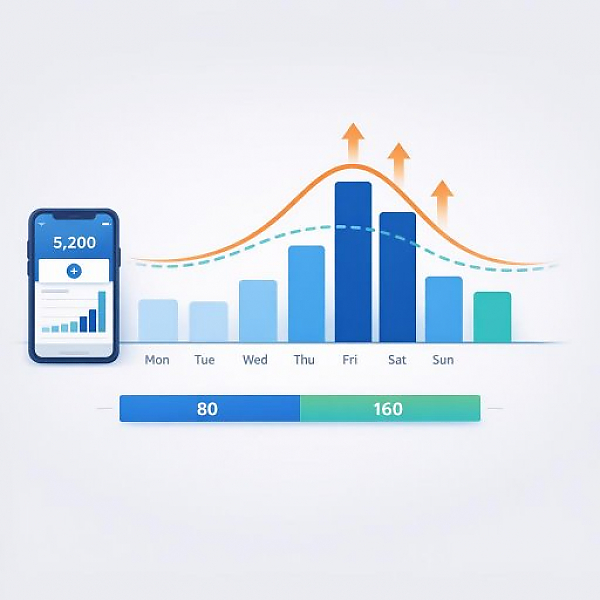
Statistics from various budgeting apps and bank analyses show clear patterns: Friday and Saturday<\/strong> are often the days with the highest spending. But why?<\/p>

Day of the week<\/th>Typical expenses<\/th>Reasons<\/th><\/tr> <\/thead>
Monday–Wednesday<\/td> low<\/td> Workday routine, few leisure purchases, fixed habits<\/td> <\/tr>
Thursday<\/td> moderately increasing<\/td> Weekly grocery shopping begins, initial leisure planning<\/td> <\/tr>
Friday<\/td> high<\/td> Weekly grocery shopping, dining out, “weekend mood”<\/td> <\/tr>
Saturday<\/td> very high<\/td> Shopping, leisure, spontaneous spending, travel<\/td> <\/tr>
Sunday<\/td> moderate<\/td> Online shopping, family activities, delivery services<\/td> <\/tr> <\/tbody> <\/table>

Bottom line:<\/strong> Most spending happens between Friday and Sunday – often driven by leisure activities, impulse buys, and consumption routines.<\/p>

2. How do routines influence our spending behavior?<\/h2>
  • Friday:<\/strong> A “reward day” after the workweek – dining out, purchases, little extras<\/li>
  • Saturday:<\/strong> Shopping day – especially clothing, tech, decor & kids’ wants<\/li>
  • Sunday:<\/strong> Boredom & online shopping – often out of impulse, not necessity<\/li> <\/ul>

    These routines are human – but they make it hard to spread your budget evenly. If you’re aware of them, you can plan more deliberately.<\/p>

    3. Savings tips: How to balance your weekly spending<\/h2>
    • Move your weekly grocery trip:<\/strong> If you shop on Wednesday instead of Friday, you avoid weekend deals (and temptations).<\/li>
    • Set a leisure budget:<\/strong> Plan, for example, €30 per weekend – and stick to it intentionally.<\/li>
    • Introduce no-spend days:<\/strong> For example, spend nothing on Mondays and Thursdays – that creates balance.<\/li>
    • Delay online shopping:<\/strong> Put items in your cart first – and buy no earlier than Monday.<\/li>
    • Analyze your budget by day of the week:<\/strong> Many tools like MyMicroBalance automatically show you when you spend the most.<\/li> <\/ul>

      4. Example: Managing weekly spending more intentionally<\/h2>

      Without oversight, a typical spending distribution looks like this:<\/p>

      • Monday–Thursday: €80 (fixed costs, small stuff)<\/li>
      • Friday–Sunday: €160 (leisure, shopping, dining out)<\/li> <\/ul>

        With deliberate planning and limits, it can become:<\/p>

        • Monday–Thursday: €100 (intentional everyday purchases)<\/li>
        • Friday–Sunday: €100 (leisure budget with flexibility)<\/li> <\/ul>

          Result:<\/strong> You save €40 per week – without cutting back, just through timing.<\/p>

          5. Conclusion: The most expensive day is rarely a coincidence<\/h2>

          Our spending follows patterns – if you know them, you can change them intentionally. Friday and Saturday, in particular, are days when money tends to be spent more freely. But with small behavior changes and a clear weekly budget, you can make a big difference.<\/p>

          Your household budget helps you recognize your personal spending curve – and optimize it step by step.<\/strong><\/p>

          Download the Budget Tracker MyMicroBalance for Windows, Android or iOS