14. September 2025 | How-Tow, Saving Tips

Spending by Time of Day – When We’re Most Vulnerable to Impulse Buys

Spending by Time of Day – When We’re Most Vulnerable to Impulse Buys

Whether at the supermarket checkout, while shopping online, or in the app store – many expenses don’t happen as planned, but on impulse. Interestingly, these impulse purchases cluster at certain times of day.

In this article, we’ll show you when you’re most likely to reach for your wallet or the order button – and how you can consciously steer your behavior with simple strategies.

1. When do we spend money most spontaneously?

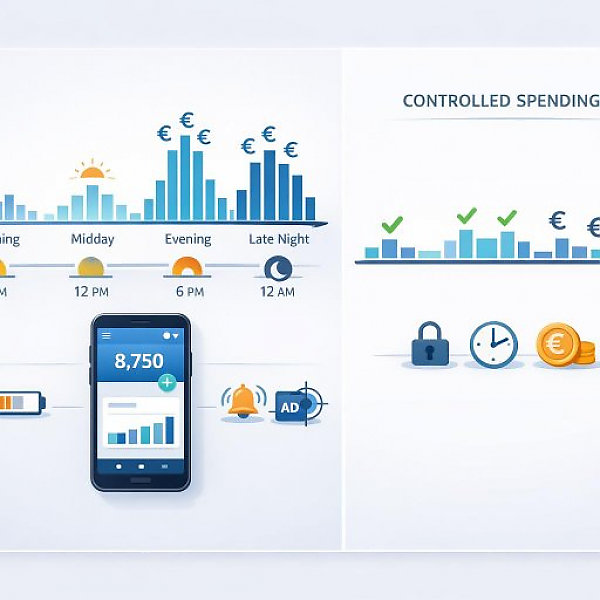
Analyses from payment providers and app-usage behavior show: There are typical “purchase trap times” when we’re especially prone to unnecessary spending.

Time of dayTypical purchasesWhy?
07:00–09:00 Coffee to go, breakfast items, transit tickets Routine, time pressure, a reward to start the day
12:00–14:00 Lunch, snacks, small online orders Stress relief, scrolling social media, boredom
17:00–19:00 Shopping on the way home, in-app purchases, delivery services Hunger, fatigue, a reward after the workday
20:00–23:00 Online shopping, in-app purchases, streaming add-ons Relaxation, less self-control, emotional purchases

Bottom line: Especially in the evening on the couch and at midday on our phones, we’re vulnerable to purchases we hadn’t actually planned.

2. Why do we react more impulsively at certain times?

  • Emotions instead of rationality: Fatigue, frustration, or the need for a reward lowers the barrier.
  • Digital availability: Online stores and app stores are open 24/7 – impulse buys are possible anytime.
  • Ads at the right time: Push notifications, evening newsletters, or Instagram ads deliberately exploit your weak spots.

3. How to identify your personal purchase-trap times

  • Analyze your budget tracker: Many apps show you times of day and spending categories – ideal for spotting patterns.
  • Log your purchases: For each purchase, briefly note “When? Why?” – after a week, you’ll recognize your pattern.
  • Watch for triggers: Is it hunger? Boredom? Stress? That helps you avoid the triggers.

4. Tips to prevent impulse spending at the wrong time

  • Set shopping time windows: For example, allow yourself to shop intentionally only from 10 a.m. to 6 p.m.
  • Cart rule: In the evening, only add items to your cart – decide the next morning.
  • Limit screen time: Especially at night – less scrolling = less temptation.
  • Turn off push notifications: No purchase impulses from deals or ads.
  • Cash instead of card during the day: Significantly reduces spontaneous spending on the go.

5. Conclusion: Time is money – in the truest sense

When you buy something is often more important than what you buy. If you know your personal “purchase-trap time,” you can counteract it deliberately – with simple routines, small rules, and a careful look at your budget tracker.

Try this self-test: When do you buy the most – and why? Your budget tracker has the answers.

Download the Budget Tracker MyMicroBalance for Windows, Android or iOS