

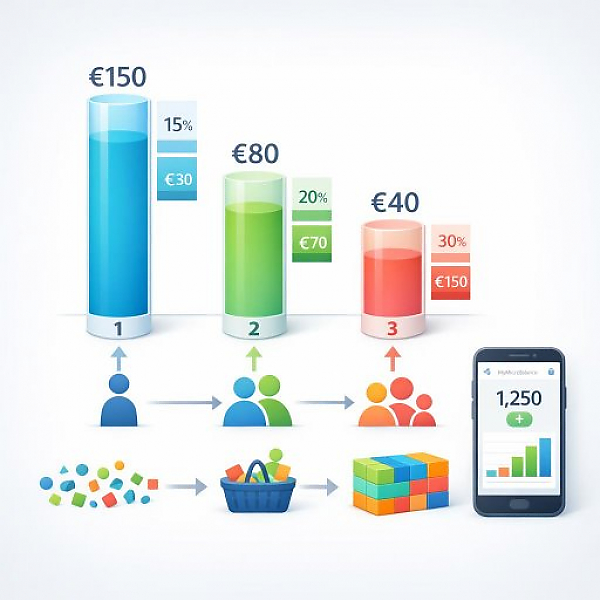
If you plan your spring shopping around seasonal deals and combine the supermarket with a discount store in a smart way, you’ll usually save 15–30%, depending on your household type. That’s often €30–€180 per month—without eating worse.
In spring, many foods are cheaper: fresh vegetables, salad greens, strawberries, herbs. If you also have a plan, you spend less money on impulse buys, convenience foods, and expensive small purchases.
The following table shows three spring shopping strategies. All figures are realistic averages. The actual numbers depend on where you live and your habits. The table helps you see the ballpark.
| Household & strategy | Monthly grocery costs in spring | Savings vs. impulse shopping (%) | Savings vs. impulse shopping (euros/month) | Typical pitfalls |
|---|---|---|---|---|
| Single – 1) Impulse shopping with no plan | €260 | 0% | €0 | Shopping while hungry, lots of convenience foods, small quantities at the supermarket, lots of snacks and drinks to go. |
| Single – 2) Weekly plan, mix supermarket & discount store | €210 | approx. 19% | €50 | Not sticking to the plan every week, throwing away leftovers, too many extras (sweets, drinks). |
| Single – 3) Seasonal planning with stock-up shopping | €180 | approx. 31% | €80 | Not rotating pantry/freezer stock, forgetting food, cooking too rarely and ordering anyway. |
| Couple – 1) Impulse shopping with no plan | €420 | 0% | €0 | Often shopping separately, duplicate purchases, lots of spontaneous meals out, no overview of what’s in the fridge. |
| Couple – 2) Weekly plan, mix supermarket & discount store | €340 | approx. 19% | €80 | Not coordinating the weekly plan, not using deals, too much fresh food that goes bad. |
| Couple – 3) Seasonal planning with stock-up shopping | €300 | approx. 29% | €120 | Stocking up in quantities that are too large, unplanned restaurant visits, stress purchases after work. |
| Family with 2 children – 1) Impulse shopping with no plan | €700 | 0% | €0 | Several small trips per week, kids’ requests in the store, ready-made meals, expensive brand-name products. |
| Family with 2 children – 2) Weekly plan, mix supermarket & discount store | €560 | approx. 20% | €140 | Snacks and drinks not planned for, special promotions tempt you into buying things nobody eats. |
| Family with 2 children – 3) Seasonal planning with stock-up shopping | €490 | approx. 30% | €210 | Not planning stock in a kid-friendly way, too much fresh fruit/vegetables that go bad, lack of overview in the freezer. |
You can see: With a fixed plan and seasonal choices, a family in the example can save up to €210 per month. For a single person, it’s around €80 per month.
Impulse shopping means: You go shopping when something is missing or when you’re hungry. You decide in the store. That feels flexible. But it’s often the most expensive option.
Typical patterns with impulse shopping:
Your downside: You pay significantly more for the same amount of food. The table above shows: Strategies 2 and 3 are clearly cheaper.
With this strategy, you plan roughly a week ahead. You use both the supermarket and the discount store. But you don’t yet shop strictly by season.
How to implement Strategy 2:
The advantage: You have structure but still enough flexibility. Based on the example table, you already save approx. 19–20% compared with impulse shopping.
This is where it really becomes effective. You plan your meals first around seasonal deals and use a

 1
1 2
2 3
3 4
4

