

In many rental apartments, there are only two realistic ways to get wet laundry dry in winter: either the electric dryer runs almost all the time, or the clothes sit on a rack in the middle of the room. Both cost money, and both affect the indoor climate. What matters is how well the individual steps are planned.
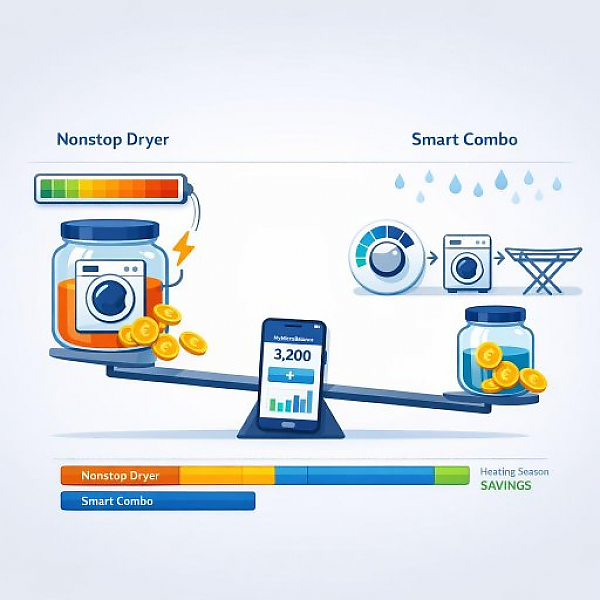
This comparison shows two typical everyday strategies and their impact on electricity costs, mold risk, and the household budget:
With Strategy A, almost every load ends up in the dryer: towels, bedding, everyday clothes, workout gear. Laundry dries quickly, nothing is hanging around in the way, and the indoor climate stays stable because the moisture is captured in the dryer.
The trade-off shows up on the electric bill. A typical condenser dryer uses about 1.5 to 2.5 kWh per cycle. With realistic usage numbers, it’s easy to estimate what that means per month.
Assume a small family or shared apartment uses the dryer in winter like this:
| Metric | Value |
|---|---|
| Dryer cycles per week | 3 |
| Dryer cycles per month (4 weeks) | 12 |
| Dryer electricity use per month | 12 × 2 kWh = 24 kWh |
| Electricity cost per month | 24 kWh × 0.35 euros ≈ 8.40 euros |
| Electricity cost per heating season (5 months) | 8.40 euros × 5 ≈ 42.00 euros |
This amount is for drying only. If more frequent washing is added, the total rises accordingly. In a digital household budget, this often shows up only as total electricity, but you can make it visible with notes such as dryer day.
Strategy B tries to get the best of both worlds: the dryer is used when it truly makes sense, and the rest dries indoors on a plan. This lowers electricity costs without the indoor climate getting out of hand.
The drier laundry comes out of the washer, the less energy the dryer or the room radiator needs. You often see the following levels:
| Spin speed | Residual moisture | Effect on drying |
|---|---|---|
| 800 rpm | approx. 70% | Dryer runtime or indoor drying time is significantly longer |
| 1200 rpm | approx. 55% | Noticeably shorter dryer runtime or faster air-drying |
A higher spin speed does use a bit more electricity during washing, but it saves significantly more energy during subsequent drying. That shows up in the annual budget.
Assume only 2 dryer cycles per week remain:
| Metric | Value |
|---|---|
| Dryer cycles per week | 2 |
| Dryer cycles per month | 8 |
| Electricity use per month | 8 × 2 kWh = 16 kWh |
| Electricity cost per month | 16 kWh × 0.35 euros ≈ 5.60 euros |
| Savings per heating season | ≈ 14.00 euros |
In winter, small choices determine how high a household’s electricity and heating costs will be. Anyone who deliberately combines spin speed, dryer use, and indoor air-drying can reduce ongoing costs without having to give up comfort.
In the end, it’s not about banning the dryer entirely, but about seeing it as a tool used with intention.





 1
1 2
2 3
3 4
4

